Our third visit – part one – the verge of a great discovery

There had been a fair amount of time spend feeling a little bit down after the January O Paramo ‘near miss’. The negative time was spent thinking ‘we’ll never find anywhere suitable that we can afford’, while in moments of positivity the thoughts were ‘ there are over one and a half million houses in Galicia, ours is just waiting for us to find it’.

As the March trip approached the mood in our household became more upbeat. It felt like we were ‘going home’.

We’d arranged to meet Natalia and John again (Galicia Holiday and Galicia Vista respectively) to see a couple more properties with each, and after almost meeting up on our second visit in January we were to be shown a couple of houses by Gonzalo from  Galicia Dreams. The flight arrangements meant that we had a day and a half free so with some further scouring of the internet we stumbled upon Spanish Country Cottages. Based in Wales, but originally from Madrid, Ramon had some interesting looking properties in the Turia Valley, and although it was a bit too far east for us, we decided that it would be worthwhile using our spare day and meeting up (see part 2).

The houses that we saw with Natalia were in the south of Galicia on the Portuguese border around Tui and after lunching in a motorway service station (a far nicer and more leisurely experience than a burger and fries at Watford Gap) we ventured out in torrential rain to look at three properties. The rain was so heavy that I kept the camera in the car for fear of drowning it. A complex of five totally ruined buildings was of interest but on a craggy slope and with an access road running right through it. Driving around the area on the tail of Natalias’ Peugeot we both decided that we much preferred the more desolate coastal north, much more in keeping with the Yorkshire moorland where we currently reside.

A drive north and a wet night at the Parador in Villalba courtesy of budget hotel booking was followed by an early morning run, in glorious sunshine, up to Ourol and a meeting with Gonzalo, his partner Delores, and local agent Julio.
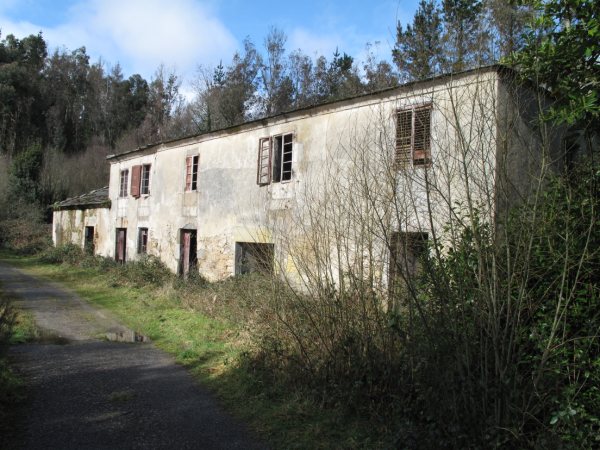
The House near Ourol

First up was a rendered house which was on the market for an amazing 68.000€ (£57,500). It was a nice house, with a lot of land (about 3 acres) but would have been a painful conversion into a Rural Hotel due to a very linear layout with one bedroom connected to the next and no corridor. It was just off a small track and quite close to a busier main road, but the main house was water tight and it had a certain something about it. The second offering was some distance away, the other side of As Pontes de García Rodríguez, so we set off on an hours follow-the-leader drive. This area is the industrial heartland of Galicia and the reaction of those we had told about the house here was not positive. We hoped to be convinced that the house was better than its postcode.

This was a property that we’d seen on the internet, and got excited about.
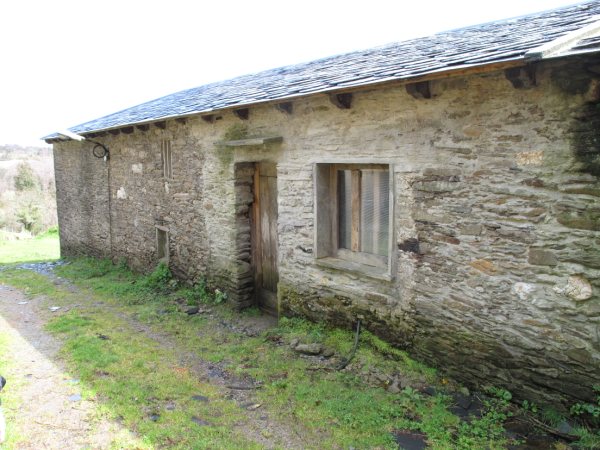
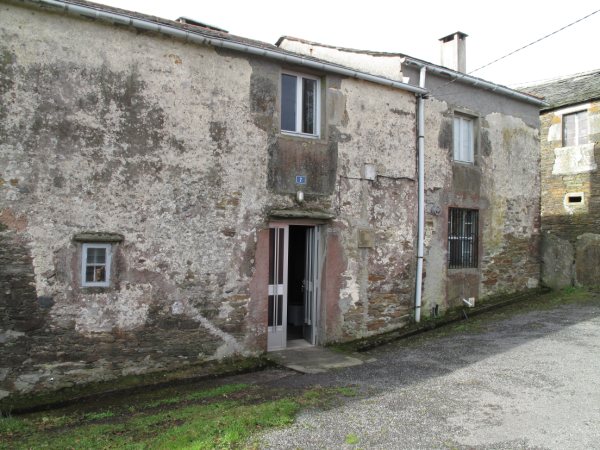
As Pontes, the main house

The house was at the end of a country lane, in the middle of nowhere and opened out onto more than seven acres of land. It had a brand new roof and was on the market for 72.000€ (£61,000). Inside was totally stripped, just waiting to be divided into rooms, but rough calculations by Gonzalo (an architect by trade) showed that the likelihood was that we’d get a maximum of four bedrooms, even with a small extension, and there would be nowhere else for us to renovate as our quarters.
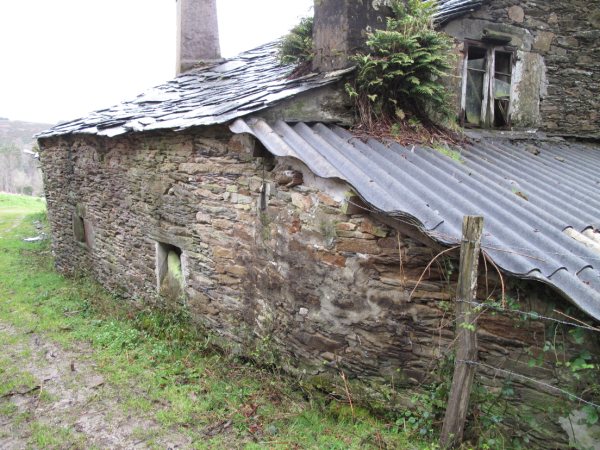
The house behind

There was another large house attached and behind this property which was owned by the brother of the vendor, but which was not currently for sale. We’d need this additional house to make the property viable as a business, and to ensure total peace an quiet. What were already cool feet became arctic very quickly.
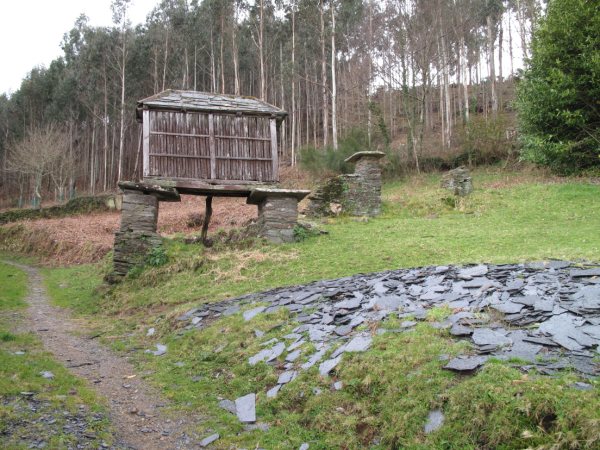
The weedy horreo and old slate roof

If you judge a property by its horreo, and some people do, then it was clear that this would be a non-starter as this was by far the most pathetic horreo that we’d seen. It is also a listed feature which means it can be renovated but not changed or removed.

Gonzalo had shown is two near misses and he was definitely on the right track. We said goodbye to Julio and followed Gonzalo and Delores to Viveiro where we ate a fantastic late lunch of Galician empanada, chipirones, some kind of fish pate with toast, and pulpo all washed down with local beer in a little restaurant off Plaza Mayor. We’d previously met Gonzalo for lunch in Santiago de Compostela on our first visit back in November and we got on with him very well. His partner Delores was also delighful, and we’d have dearly loved to get involved in a project with them, perhaps we still will?

We felt closer to finding a property now than we had done for a while and we were convinced that the coastal belt in the north of Galicia was the area where we wanted to settle. We felt that the following days trip to the Turia Valley  to meet Ramon would probably be a waste of time, but we were positive that the right house was just around the corner.

But not as close as it actually turned out to be.
Posted in Background | Tagged , , , , , | Leave a comment

Don’t say Spain, say Galicia

When you first tell people that you’ve ‘bought a house in Spain’ it certainly gets their interest.

No matter how casual the acquaintance you can see the thought process etched on their faces  (I know because before I was a proud Spanish property owner, I used to go through it). It is a process which goes something along the lines of;

“Lucky swine. A place in Spain. A place in the Sun. A pool. Sun and a pool. Sangria. Tapas. Paella…sun, a pool and paella with beer. San Miguel. A villa…a shiny new villa…with a pool. Lucky, lucky, swine. Could I be friends with this person. Sun. Pool. Beer. I guess he’s okay. Now I need to look really interested…he may invite me out. Pool, wall-to-wall-sun, beer. Lucky swine!

That all happens in a millisecond and then they say “really, Spain…where abouts?”.

It is at this point that I can drop my little bombshell, with a smile on my face, as I know what has just gone through their mind. ‘Galicia’, I say with chest puffed out with pride, as I ready myself for the next inevitable question.

To a man, or woman, the reaction is the same. A furrowed brow, a crumpled nose, that vacant look as they search the brain archives of their ‘O’ level geography for any trace of Galicia in relation to Spain. ‘Is that near Malaga?’ comes the follow up.

Then I can make a start on the long explanation.

Galicia is the north western bit of Spain. The bit that runs across the top of Portugal on the Atlantic coast. It’s a square, about the size of Belgium, sparsely populated but eye-achingly beautiful. As green as the Lake District, as diverse as the west coast of Scotland and covered in beautiful little coves and beaches like Cornwall. It has world heritage sites (Lugo, Santiago de Compostela, A Coruña, and in nearby Asturias, Oviedo) , a world biosphere site and acres of rolling unspoilt countryside.

It is split into four provinces; Lugo, Ourense, Pontevedra and A Coruña (working clockwise from 12). Each has its own character and loyal citizens but all share a common language (Gallego), love of food and good wine, Celtic heritage, and all of which were devastated by mass migrations away from the area over the last two centuries.

There is no denying that it rains a lot, it takes the worst that the Atlantic Ocean can throw at it, but if you can define rain as ‘happy’ and ‘sad’ then Galicia definitely has ‘happy’ rain. Santiago de Compostela,  for example, experiences rain on around 100 days per year but these will often be showers which blow through after thirty minutes followed by glorious sunshine. And in the summer it never gets excessively hot, pleasantly hot, but not the kind of heat which cooks you from the soles of your flip-flops upwards. It’s where Spaniards go on their holidays, which is why they keep it to themselves.

And the food is to ‘die for’, although as it is very healthy you are unlikely to do so. The finest and freshest of seafood, fresh vegetables and beans, salad, empanada, pork and beef. All this washed down with the wines which the Galicians, and Spaniards, keep all for themselves. Even a 5€ a litre house wine is usually better than a £20+ UK restaurant bottle.

And the people are so friendly. Always willing to help, to explain, to buy you a coffee. We’ve been welcomed by everyone we’ve met since we started looking for a house. People seem generally pleased to have you around and when we tell them we are setting up a hotel they seem delighted that we are to become part of their community, even through their disappointment when we tell them that we’ve not got any children (but that is a different story). 

I stop for breath, and so does my newly ‘Galicia educated’ acquaintance. They are still thinking ‘beer…sun…pool’, but it is enhanced and embellished with thoughts of ‘culture, food, wine, scenery, health, and friendly people. And my job is done.

Hopefully we’ve just got another potential visitor on the hook who will come to spend some time at our future Casa Rural and who too will discover a new Spain…the paradise that is Galicia.

Posted in Places to Visit | Tagged , , , | Leave a comment

Our second visit – part two – time with Mark

Mark Adkinson who runs Galician Country Homes deserves his own blog post as part of our background story for two reasons;

  • He showed us a house which we came very close to buying.
  • While we were with him we saw one of the most amazing and unexpected things.

We visited Mark at his house in Rábade near Lugo, a home which he and his wife have lovingly restored by hand, and which contains many of its original features. Sitting beside the larger than life character (you’ll know what I mean if you ever meet him) we were shown twenty or so properties on his website (with additional photographs) from which we selected half a dozen to view.

First stop was a house near O Páramo south of Lugo (and it could have been the last), as over the next hour we discovered what was pretty close to our dream house. Approached down a 500m private mud driveway, the house was set on its own with three barns, and the foundations of a medieval watch tower. From the property you could see no other houses, no signs of civilisation, and it was so quiet that all you could hear was the wind in the trees and the occasional bird song.

Private Driveway

The house was massive, over 420 square metres per floor over two floors. The foundations were erratic boulders dropped by receding glaciers. It was built entirely of granite, had a separate bread oven house, a very grand horreo, a decent amount of land, a courtyard, and three barns, all of which could be converted into living accommodation.

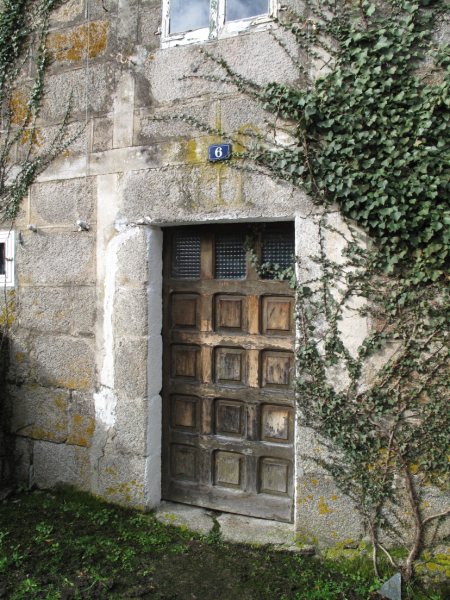
Lovely Old Front Door

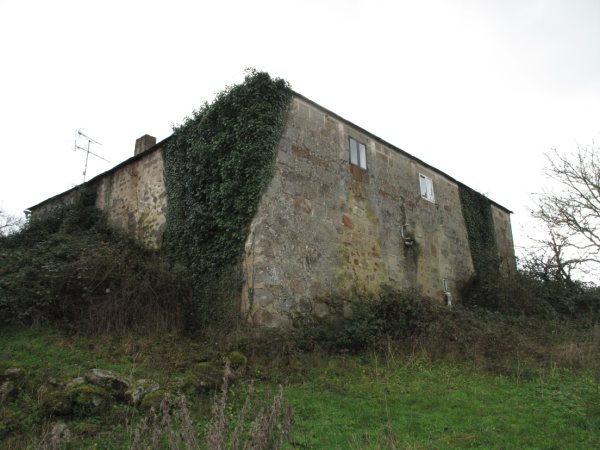
Back of the Priest House

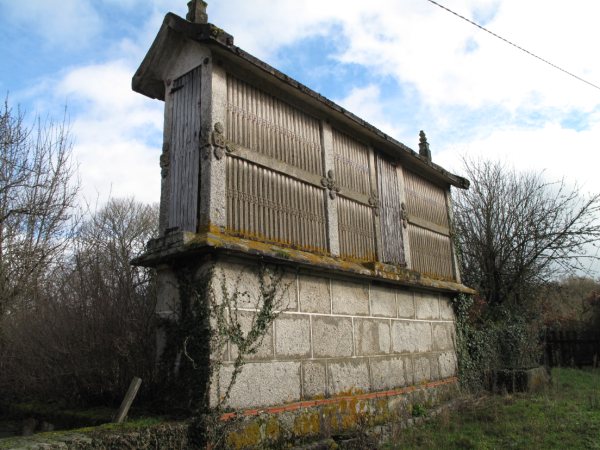
The Horreo

After a leisurely walk around the property, and already besotted, there were more surprises to come. Inside the house, wandering through the six upstairs bedrooms, it was clear that something was not quite right. The upstairs space didn’t match the room downstairs (mostly cattle pens). Mark explained that there was a secret room which could only be accessed through a disguised trapdoor in the corridor downstairs. He went on to explain that local folklore suggested that the room was a hiding place for priests during the Spanish Civil War persecutions and massacres of the 1930’s to 1950’s. We immediately coined the name ‘The Priest House’.

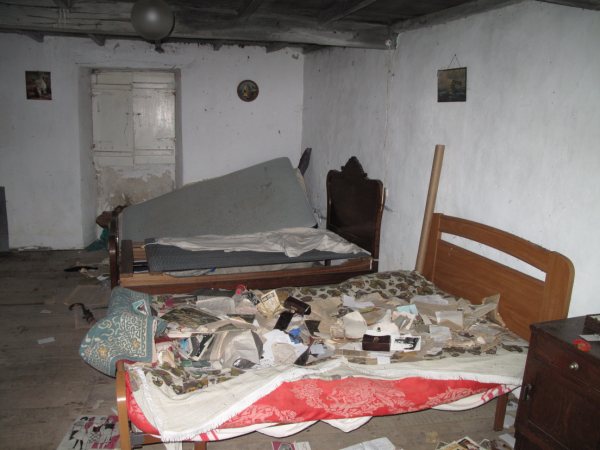
Like the Mary Celeste

The house was very strange inside. It had been abandoned in the 1980’s and felt as though the large family that once called it home might walk back in at any moment. Half drunk bottles of wine, made beds, clothes and shoes in the wardrobes, photograph albums and dirty plates in the sink. It was more than a little eerie, like the Mary Celeste.

There was massive scope for the property, it had everything we were looking for. It was just a little far from the airport and the coast, but as there was a pilgrimage route within 10km we brushed aside our fears and decided that this was the house that we wanted. The problem was that it was on the market at a budget-busting 143.000 € (£130,000 at the time).

We were recommended an architect by Mark who we immediately called and asked to take a look at the house and give us an estimate of renovation costs for the main house. He scheduled it in for later in the week, sadly after we’d gone back to the UK.

On leaving the property to travel to the next valley to look at another house, we had one of those moments that you remember for the rest of hour life. Mark was driving his MPV with myself in the front and Amanda in the back seat when he slowed and pointed out a boar up on the hillside in front of us. We stopped and watched as the ‘boar’ stood up on its hind legs and walked across the field into the woods. ‘That’s no boar that’s a bear’ (un oso). Although brown bears are native to Asturias and Galicia there are thought to be only around thirty of them, and it was the first that Mark had seen in over twenty years in Spain.

Mark called a friend in the local wildlife movement to report the sighting and he was pretty excited gauging by the shouting in Spanish on the other end of the phone. The authorities were apparently aware that there was a young bear in the area who had been thrown out of his ‘sloth‘ and he’d left a trail of smashed bee hives from Asturias and into Galicia. They had lost track of him a few days previous and were delighted to have got a tip-off to his whereabouts. We were absolutely buzzing…all three of us.

The other houses that we saw with Mark didn’t come close to the Priest House. After returning to the UK we got an e-mailed estimate for renovation from the architect which blew the project (with the high purchase price) outside our budget. Several days of manic depression followed, as now the dream seemed further away than ever. We talked ourselves into the house being too far from the coast and too far from the airport, but it would have been perfect and we were very disappointed.

Plans were made to ‘get back on the bike’ and make another trip in March. Maybe this would be the trip when we would find our dream home? Perhaps we’d even see another bear.

Posted in Background | Tagged , , , , , , | 3 Comments

Our second visit – part one

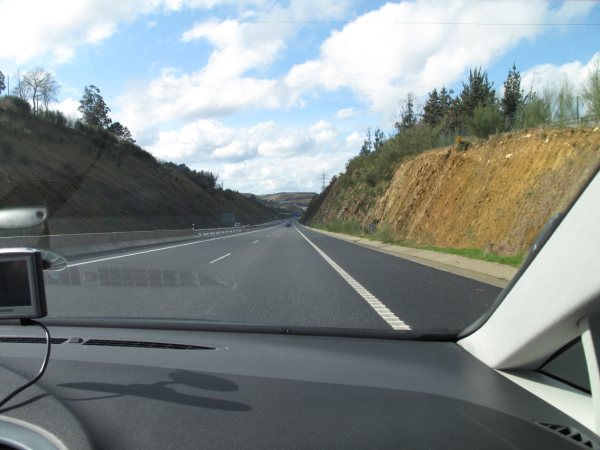
A brand new year (2010), lots of hope, the UK in the grip of an arctic blast and we were following our hearts back to Galicia for house hunting trip number two. We opted to fly both ways using Santiago de Compostela airport (taking our chances with Ryan Air) as despite our arranging meetings in three out of the four provinces of Galicia (Santiago de Compostela, Lugo and a Coruna) we’d already found out that the emptiness and the quality of the roads meant that driving was once again a pleasure, rather than the chore that it has become in England.

Rush hour on a Galician motorway (honest)

We were scheduled to meet three different estate agents over four days and view around twenty pre-selected properties. We also now knew that in Galicia, house inspection trips evolve rather than operate to any planned timetable. The likelihood was that some of the houses that we’d enquired about would inexplicably be dropped from the schedule, while others (those that an agent had not shown for a while) would get added to the list to keep their customers happy. Knowing this we developed a code to get away from a property as soon as possible, once one of us realised it was a non-starter (usually Amanda), the code was to stare at at each other and pull faces! From the outset I wasn’t convinced that it would be that much of a secret.

First up was John and Sieni from GaliciaVista (originally from the Netherlands) and whilst we saw a number of properties with great potential, most of them didn’t tick enough of our requirements boxes to merit detailed consideration. One property that they did show us would have been great, way out in the forest and with great views and land, but sadly it had just sold and we were only being shown it in case the sale fell through.

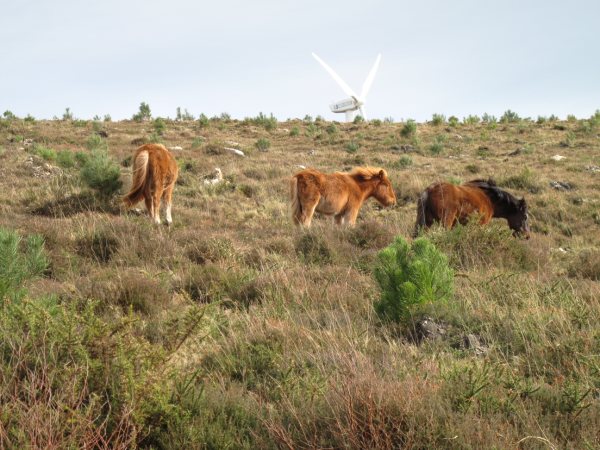
Our guides saved the best until last as we headed into the twilight and Ortigueira up on the north coast. We got our first glimpse of the Galician wild horses, out on the moorland, a majestic sight which we would see again and again over coming days and trips.

Wild Horses near Ortigueira

There are hundreds, maybe thousands of these horses all over the province of La Coruna. They are rounded up annually to have their manes cut for making brushes and some (avert your eyes anyone of a squeamish disposition) are culled for meat. 

Six bedroomed Ortigueira House

The house itself was out in the middle of nowhere in a small village of so few inhabitants that the state were now offering a monthly salary just to live there. The house was part converted and had a large field (finca) just over a small courtyard. The house had the potential for six plus bedrooms with plenty more living space and a couple of outbuildings, including a blacksmiths workshop, that could also be converted into self-catering lets.

Blacksmiths Barn

The problems were the price at 105.000 € (£93,750 at the time), and that it faced north-east restricting the amount of sun on the house. We spent an age in the village but in the end we decided it was another to remove from the list of potentials. We had spent the day giving John a great idea of what we were after, he was now on the lookout for our ideal property.

A quick meal, short sleep, and long drive and we were in the capable hands of Natalia from Galicia Holiday. Our initial choices, mostly around A Lama, were immediately dismissed as they were ‘too close to the prison’. Instead, Natalia showed us four belters.

L-shaped house with a big barn

The first, in the eary morning sunshine which followed an almighty downpour, was a lovely L-shaped house where the majority of the downstairs was still milking stalls. After we broke in, the owner lost their key, we determined that upstairs was too dangerous to walk on and despite having the land, location, aspect and separate barn that we craved the stumbling block was a very narrow access between two houses that would have stopped anything other than a small hatchback getting to the house.

Modern House with Old Barn

The second house was a joy and nightmare at the same time. The main house had been refurbished and rendered in the 1990’s (as you can see above) and was, at best, awful. It did, however, have a massive barn which could have been a three storey conversion at the far end of which was the old bar complete with date stone over the door. The land was a good size too and the aspect great but we’d have wanted to demolish the 20th century out of the property.

Just a little too small

House three was almost not seen. Mud on the road almost spun us into a ditch but Natalia did well to recover the situation. This was a property that we’d seen on the internet and was quite close to a roman building now used as a church. It has a small separate barn which was a little too small, and despite good aspect and a fair amont of land, including a small forest, it wasn’t viable as a Casa Rural, especially at 110.000 € (£98,000).

Great House, not enough space

As dusk descended we headed for the final property of the day near A Estrada where we’d left our car ten hours earlier. This was a beautiful barn, once again with a lot of scope, but despite a vineyard and orchard the lack of any separate accommodation for us, and a price of 85.000 € (£76,000) meant that it wasn’t for us.

Day three properties would prove to be much more interesting, as would the wildlife, but more about that in part two.

Posted in Background | Tagged , , , , | Leave a comment

Santiago de Compostela

I read somewhere (yes I lost the link!) that 86% of visitors to Galicia spend at least some of their vacation in what is considered the most holy city, for catholics, outside of Rome. Therefore it is a good place to start to describe some of the fabulous places that we’ve found across the autonomous state of Galicia, and places that you’ll want to visit.

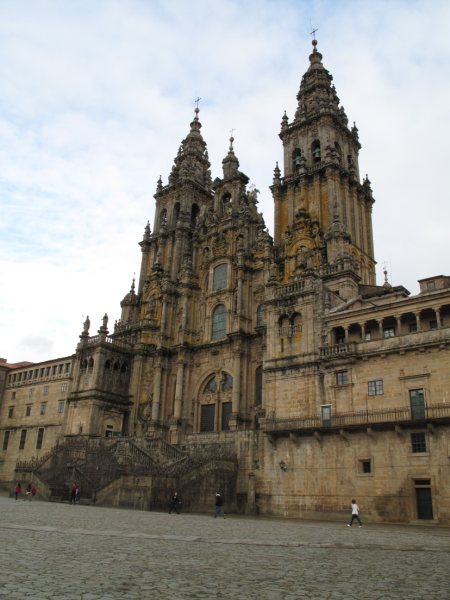
Santiago de Compostela Cathedral

The Wikipedia entry for Santiago de Compostela (not to be confused with the capital of Chile and therefore most often referred to by its’ full name, but known to as S de C from here on in to save my typing fingers) states that the name could have come from the latin translation for ‘Field of Stars’ but it is more likely to be a derived from the vulgar latin for ‘Burial Ground’. Pilgrims, in their tens of thousands, have been making a bee-line here for well over a thousand years. They are so numerous that at the height of summer the cathedral operates a turnstile system for entry.

We’ve visited three times as part of our property searching, primarily because the airport is the most central for accessing the whole of Galicia, but also because on our first visit we liked what we saw, and as importantly, ate. Rather than dusty sandals, hair shirts and scallop shell covered staffs, we’ve always arrived in petrol powered luxury.

Google Maps reckons that it is a 188km (2 hours and 20 minute) drive from the house in Lineiras to the heart of S de C. The journey takes you past Lugo and Betanzos (more on both of these later as they are worth a visit in their own right) and then down the toll road (the E-1). With Galicias’ empty roads it is a pleasant drive on a mix of a-roads and motorways with plenty of places to stop and take a quick coffee.

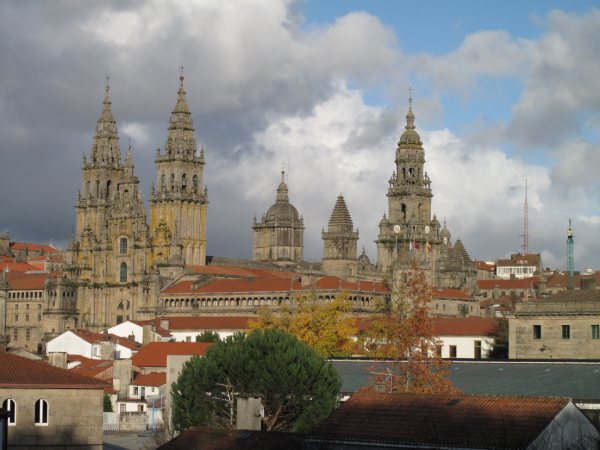
Santiago de Compostela City

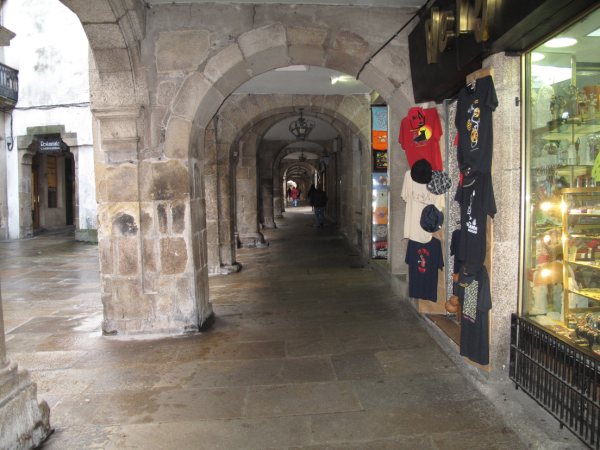
S de C itself is, as the guide books say and we agree, a ‘must see’. It has the cathedral, monestaries, churches, museums, beautiful porticoed medieval streets, open spaces and parks, secretive little squares and all the restaurants/cafes/bars that any weary traveller could wish to find. 

Santiago de Compostela Portico

It is almost impossible to get a car into the centre, so park outside the ring-road and plan to spend at least half a day walking the street and visiting the many impressive medieval, baroque and gothic buildings. In particular start at the catherdal and walk south down Rua de San Francisco to make your mouth water at the culinary delights on offer, and plan where you will eat that evening. 

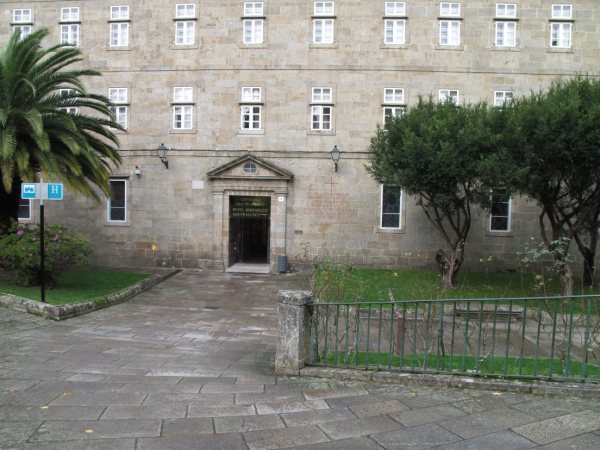
Hotel Monumento San Francisco

We have stayed here on three occasions, the first time at the sensational Hotel Monumento San Francisco, and the other twice at Hotel Hesperia-Peregrino which while in a brilliant position, and pleasant enough for the price, is a couple of years past its ‘needs a refurbishment’ date. Their are seventy plus hotels here to suit every pocket, if you do plan to stay the night.

The place really comes alive at night, even in the depths of winter, with lively and bustling bars and restaurants and many pilgrims toasting their success at completing their long journeys.

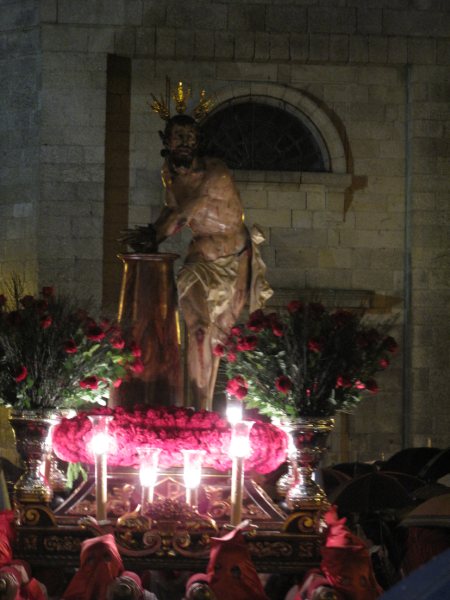
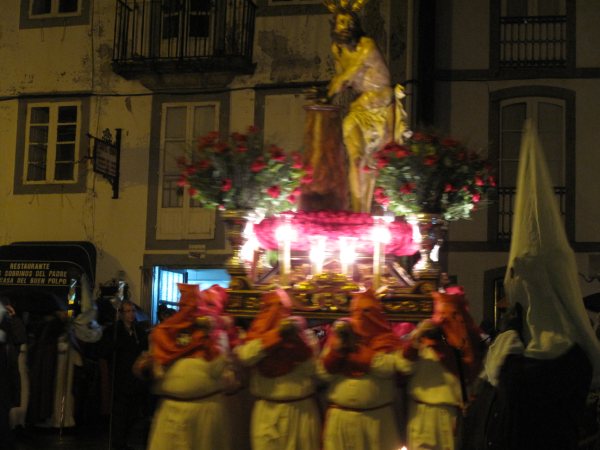
Procession

On our third visit we were fortunate enough to stumble upon a midnight procession as part of Semana Santa. The streets were heaving, at midnight on a thursday, with people of all ages to witness the procession of Jesus around the cobbled streets. Over 100 hooded, and often barefoot, people carried the religious icon around the streets.

S de C is definitely worth the effort, one of the jewels in Galicias crown.

Posted in Places to Visit | Tagged , , , | Leave a comment